When the world feels heavy
When the world feels heavy, it can be hard to know what to do with that weight.
Many of us are moving through our days carrying a quiet sense of overwhelm, collective grief, uncertainty about the future, and the constant demand to keep functioning as if everything is normal. It’s no wonder our bodies feel tired, our minds feel foggy, or our hearts feel tender.
Feeling affected by the world around you is not a weakness. It’s often a sign of your humanity. When we care deeply about people, justice, community, and the future, it makes sense that we feel the impact of what is happening beyond our own lives.
When the world feels heavy, the goal isn’t to ignore it. The goal is to support ourselves so we can stay connected without becoming completely consumed by it.
Here are a few gentle ways to care for yourself during heavy times:
Naming and Witnessing Your Experience
One of the simplest yet most profound things therapy offers is a witness. Someone who can hold space for the weird, messy, brilliant thoughts you generate. Naming the overwhelm says, “This is real. This matters.”Come back to your body.
When things feel overwhelming, our nervous systems often shift into survival mode. You might notice tension in your shoulders, shallow breathing, or a restless mind. Small somatic practices including, stretching, stepping outside, or placing a hand on your chest, can help remind your body that you are safe in this moment.Limit the constant input.
Staying informed matters, but endless exposure to distressing information can overwhelm our nervous systems. Giving yourself permission to step can be an act of care.Express what you're feeling.
Heavy emotions often need somewhere to go. Journaling, drawing, talking with someone you trust, or moving your body can help release what is building inside. Expression allows emotions to move rather than stay stuck.
Most importantly, remember this: you do not have to carry the whole world on your shoulders.
Supporting yourself by resting, creating, connecting, feeling is not avoidance. It’s what allows us to remain present and sometimes, in the midst of heaviness, the most radical thing we can do is keep connecting to our humanity.
When Creativity Goes Quiet: Grief, Capacity, and Letting Nothing Happen
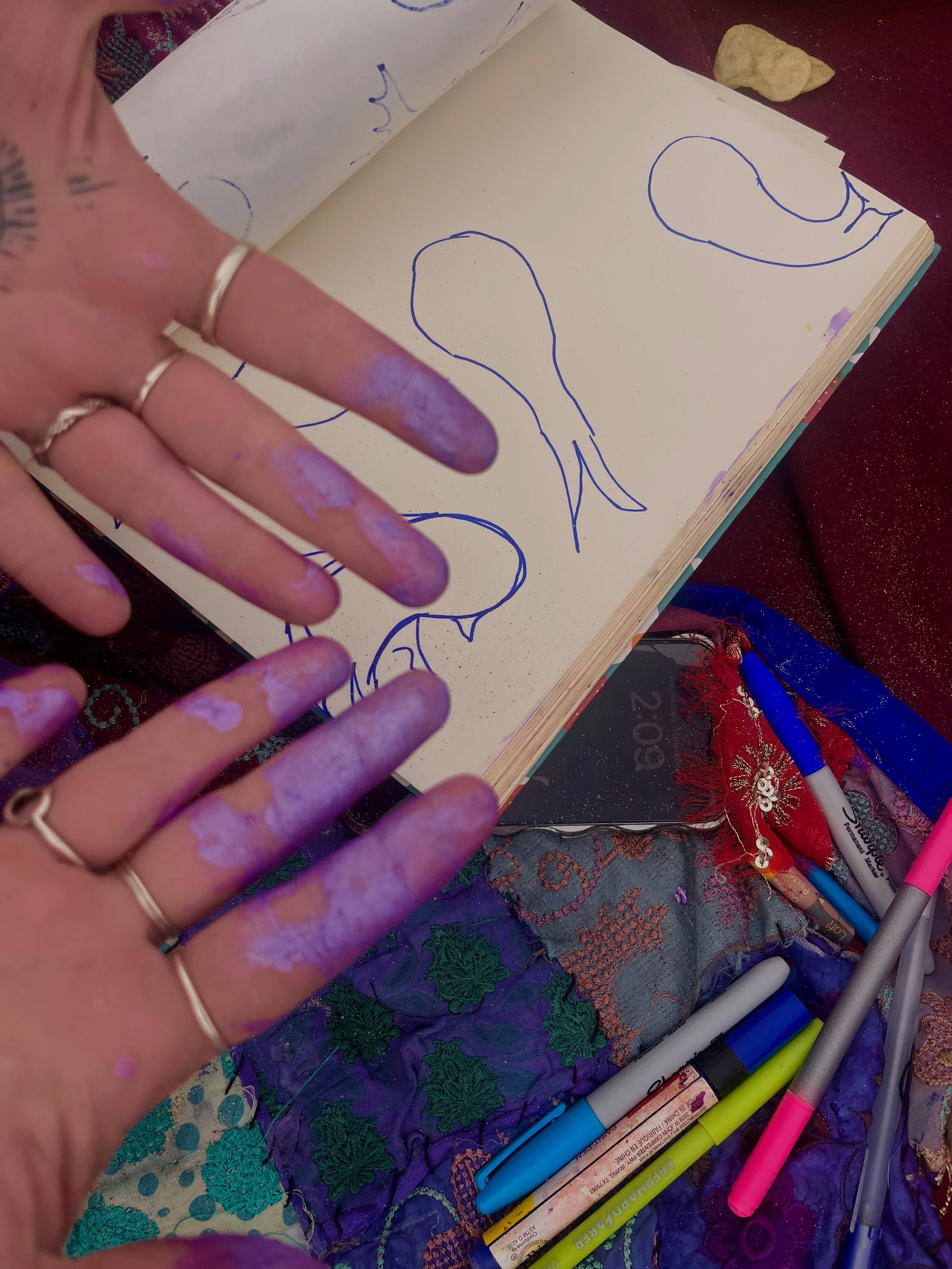
For a long time, creativity has been one of my primary ways of making sense of the world. When something hurts, I usually reach for a pen, paint, movement, or metaphor. Creativity has been a place where feelings can land without needing to be explained. This is especially supportive as a neurodivergent individual as sometimes it has been challenging for me to speak my truth, and as a result I have leaned on expressing in other ways.
And then grief arrived and I couldn’t do any of that. Not because I didn’t care. Not because I was avoiding healing, but because I simply did not have the capacity to process anything.
Grief didn’t ask me to express myself. It asked me to survive.
As a creative, there’s a story we often tell about creativity as medicine. That when things are hard, we should make something. That creative expression will move us through the pain. And sometimes that’s true. But there is another truth that feels just as important to name: sometimes grief makes creativity feel impossible. Sometimes even gentle reflection feels like too much contact with our emotions.
In the thick of grief, my nervous system wasn’t interested in meaning-making. It was interested in safety. In simply getting through the day. In minimizing input, not creating output. The idea of “processing” felt overwhelming and even a bit invasive.
So I stopped.
I stepped back from creating. The feelings were unformed, raw, and vast. Creativity, which usually feels like a companion, suddenly felt like an invitation to go somewhere I couldn’t safely go yet. And that, too, was wisdom in itself.
As a therapist, I know that when the nervous system is overloaded, integration isn’t the goal, regulation is. Grief often lives in the body long before it can be held in language, symbol, color or metaphor. Sometimes the most compassionate thing we can do is reduce demands, even the ones that usually nourish us.
I had to let creativity rest so that I could rest. Instead of creating, I tended, I rescheduled, I canceled and I widened timelines. I let things be unfinished. I allowed my world to get smaller. This wasn’t giving up. It was listening.
There’s a quiet kind of creativity in this, even if it doesn’t look like art. Choosing softness. Rearranging your life to make room for grief. These are deeply creative acts, even if nothing is produced. What I’m learning is that creativity doesn’t disappear in grief but, it does goes dormant. It waits and trusts timing more than we do.
And maybe this is an invitation to loosen the grip on what we think healing should look like. To remember that creativity (or anything we love to do) is not a requirement, a tool, or a task. It’s a relationship. One that can withstand silence. One that understands when we need to turn inward, curl up, and do nothing at all.
If you’re grieving and can’t bring yourself to create, you are not broken. You might simply be listening to your capacity. And when it returns, it may show up differently. Slower or maybe more expressive than ever before.
Until then, it’s okay to let nothing happen.
Kiley | The Living Room x
Welcome to Beneath the Couch Cushions
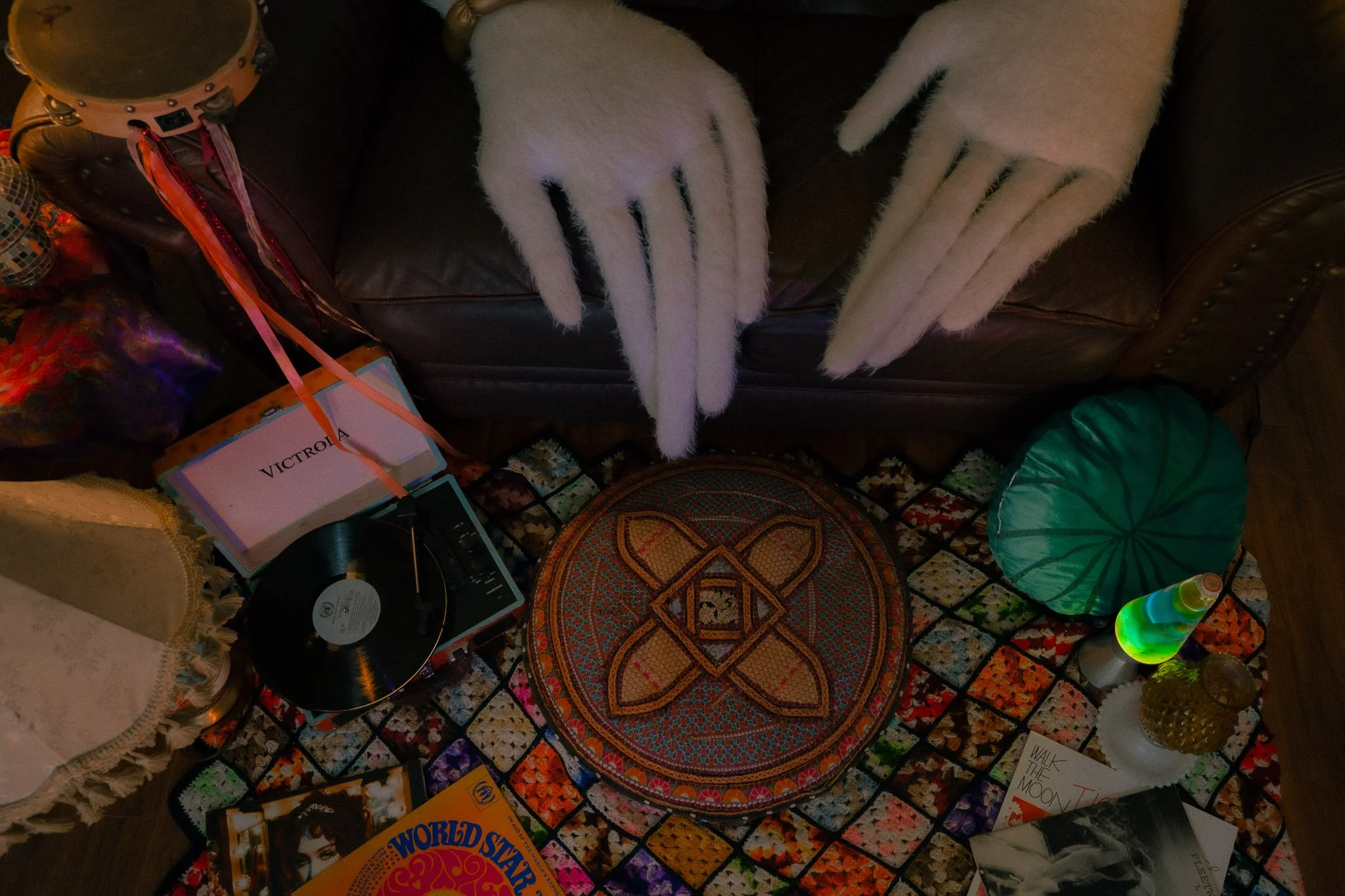
If you’ve ever lifted the couch cushions in your living room, you know what’s hiding there: crumbs you were too tired to clean up, a pen you hyperfocused on and then immediately lost, a half-finished idea, a coin, a hair tie, and tons of trinkets you didn’t even realize you dropped.
Therapy is a lot like that.
It isn’t a polished room where you’re expected to organize your thoughts, make eye contact, or explain yourself in neat paragraphs. It’s a space where wandering thoughts, big feelings, sensory overwhelm, and creative mess are welcome. A place to gently pull back the cushions and notice what’s been collecting in the unseen spaces of your life.
This blog will hold educational insights about therapy, the nervous system, creativity, identity, and healing. You’ll also find poems, reflections, and half-formed thoughts that make room for feeling instead of fixing.
Some entries may read like gentle psychoeducation. Others may feel like a note passed across the room, a creative prompt, or a moment of shared wondering. All of it is written with the belief that learning can be soft, that insight can be playful, and that healing doesn’t have to be linear to be real.
Take what resonates. Leave what doesn’t. Come back when you need somewhere to land.
From my couch to yours,
Kiley | The Living Room x